Movie Finatics The Place for Movie Lovers
Related Articles

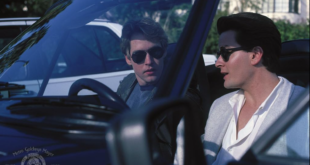
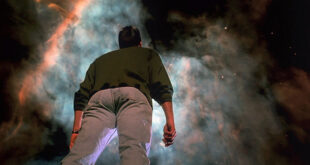
By the late 1990s, the teen movie had settled into a comfortable rhythm. After the success of Scream, studios rushed toward slick horror built around young casts and fast dialogue, while science fiction usually leaned louder and more effects-driven. Teen films in general became more self-aware. The post-Pulp Fiction irony had set in. Sitting right between those lanes was The Faculty, a film that never quite reached the cultural status of the era’s biggest hits but has quietly aged far better than many of its contemporaries and can also be considered a cult film. Directed by Robert Rodriguez and written by Kevin Williamson, it is the kind of movie that looks straightforward on first watch but reveals a surprising amount of craft and genre fluency the closer you examine it. There’s nothing wrong or shameful about being a good genre picture.
At Herrington High School, things start to feel off when several teachers suddenly begin acting cold, strict, and entirely unlike themselves. Casey, a quiet student who usually keeps to himself, finds a strange creature on the football field and starts to think that something seriously wrong is happening on campus. As the mood around the school grows more unsettling, he teams up with a small group of very different classmates, each realizing they might be dealing with more than just typical school drama.
What begins as suspicion quickly turns into a desperate attempt to understand what is going on before it gets worse. The students struggle to figure out whom they can trust as they search for answers and a way to protect themselves. Blending science fiction with the everyday pressures of high school life, the movie turns a familiar setting into a tense, unpredictable place where danger can hide in plain sight.
Right away, the movie signals its connection to classic science fiction, especially Invasion of the Body Snatchers. Like both the 1956 original and the 1978 remake, the horror comes from emotional absence rather than visual transformation. People look the same, but something essential is missing. When the Faculty begin moving through the hallways with quiet unity, their stillness mirrors the pod people gatherings in those earlier films. Individual personalities dissolve into collective behavior.

Rodriguez understands that paranoia works best when it creeps rather than sprints. The school is brightly lit, familiar, almost comforting, yet something is clearly wrong beneath the surface. One of the most effective recurring images is the teachers compulsively drinking water in the faculty lounge, their faces blank, their conversations stripped of spontaneity. It is subtle enough that you briefly wonder if the students are imagining things.
Centering the story on Casey Connor proves to be one of the film’s most intelligent decisions. Elijah Wood plays him as observant rather than heroic. Early scenes show him being shoved into lockers and ignored by classmates, which makes it believable that he notices behavioral shifts others miss. His importance comes not from strength but from attention. When he connects the parasite from the football field to the faculty’s strange demeanor, the film quietly positions awareness as a form of courage.
The tension escalates beautifully during the classroom scene with Mrs. Brummel. When the alien is exposed to heat and reacts violently, her sudden transformation is genuinely disturbing. She pins a student’s hand to a desk with a paper cutter and calmly declares that humanity is on the verge of extinction. The delivery is controlled rather than theatrical, which makes the moment linger. It also hints at another lineage running through the film, the body horror tradition associated with directors like David Cronenberg, where infection spreads quietly before erupting into violence.
Josh Hartnett’s Zeke adds another dimension. Introduced as a leather jacket-wearing outsider who sells homemade stimulants from his car trunk, he initially looks like a familiar high school archetype. Yet the drug he manufactures becomes one of the film’s lever narrative tools. When the students discover the powder kills the parasites, suspicion turns into strategy.
The science lab testing sequence is where the film’s use of earlier genre cinema becomes unmistakable. Sitting in a tense circle, each student snorts the powder to prove they are still human, knowing a violent reaction will expose anyone infected. The dynamic strongly recalls the blood testing scene from John Carpenter’s The Thing. Trust erodes with every passing second. Friends study one another carefully. Relief is always temporary.
That moment also collapses the school’s social hierarchy. The popular girl, the athlete, the rebel, and the overachiever all become equally vulnerable. Delilah, who earlier obsessed over status and her newspaper’s prestige, breaks down completely when control slips from her grasp. Her later assimilation feels thematically precise. The student most invested in perfection becomes literally inhuman.
There are other subtle nods woven throughout. Robert Patrick, as Coach Willis, carries a built-in menace for anyone who remembers his unstoppable presence in Terminator 2. When he charges across the field pursuing students, the image evokes that same relentless energy. It is a clever piece of genre memory used without fanfare. Traces of Ridley Scott’s Alien also surface as the story progresses. The parasite is not simply a creature to outrun. It enters the body and overrides autonomy. By the second half, the high school begins to feel like a sealed environment. Escape seems unlikely, and help is nowhere in sight. The threat is internal as much as external.
Rodriguez reinforces this with tactile creature work that favors physical effects over weightless digital imagery. When a parasite wriggles across the floor after escaping its container, the camera lingers just long enough for the audience to register its texture. That physicality connects the film to an earlier filmmaking approach where monsters occupied real space.
The football game sequence deepens the isolation. It should feel communal and safe, yet the camera catches blank stares in the crowd and synchronized behavior spreading through the stands. Extraordinary plays are being made on the field, like Usher clotheslining an opposing player. By the time star athletes begin acting with unnatural aggression, it becomes clear the takeover is accelerating. The students realize there is nowhere left to disappear into anonymity.
Famke Janssen delivers one of the film’s most interesting turns as Miss Burke. Initially awkward and understated, she later reveals herself as the alien queen with unsettling composure. Her conversation with Casey in the empty school stands out because it is not framed as a traditional villain speech. She calmly explains that her species eliminates conflict, promising a world without war or suffering. It echoes the unsettling logic found in many Cold War-era invasion films, in which surrender is presented as a path to harmony. Order sounds comforting until you consider what must be sacrificed.
The climactic confrontation in the swimming pool is staged perfectly. Water amplifies vulnerability, lighting keeps the creature imposing without overexposing it, and the action stays grounded in survival rather than spectacle. Admittedly, the early computer effects have aged poorly.
What ultimately ties these influences together is the film’s central idea about assimilation. Cold War science fiction often treated invasion as a metaphor for ideological conflict. The Faculty updates throughout teenage life. High school is already a place where fitting in can feel mandatory. Students adjust their dress, speech, and behavior to avoid standing out. The aliens literalize that pressure. Individual quirks vanish. Emotional expression disappears. Everyone moves in sync.
Seen today, the film also plays like a quiet commentary on authority. Teachers are meant to guide, yet here they demand obedience above all else. When Coach Willis snarls at a student he always found irritating before attacking him, the line lands because it twists a familiar adult frustration into something predatory.
It is worth asking why The Faculty never joined the upper tier of late 1990s genre conversation. Part of the answer may be that it makes everything look effortless. It does not chase prestige or attempt to reinvent itself. Instead, it understands the traditions it comes from and builds on them with confidence. The references function as conversation rather than imitation. Looking back, the movie feels like a reminder of a time when studios regularly produced mid-budget genre films that were allowed to be sharp, strange, and self-contained: no franchise blueprint, no universe building, just a strong premise executed with clarity.
What stands out most on revisit is the film’s sincerity. It never strains for importance. It trusts the tension, trusts the characters, and lets the ideas surface naturally through action. Beneath its accessible exterior is a film in active dialogue with decades of science fiction history, carrying forward the paranoia of mid-century invasion stories, the tactile horror of the 1980s, and the character-driven energy of 1990s teen cinema. The Faculty is no masterpiece, nor is it groundbreaking cinema; it is a solid genre picture. Something we see less and less of these days.