Movie Finatics The Place for Movie Lovers
Related Articles



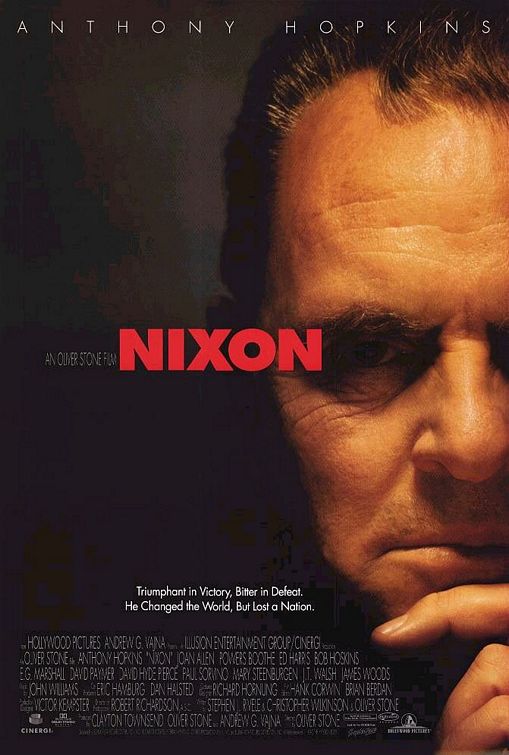
Oliver Stone’s Nixon (1995) follows a president who treats criticism as proof that people have turned against him. At home, he wants his wife to reassure him. In office, he expects officials to help him defeat anyone he regards as a threat. His need for loyalty keeps narrowing the room other people have to exercise their own judgment.
Trump’s treatment of James Comey and Mike Pence makes that conflict familiar. Comey described a private demand for loyalty; Pence faced public denunciation after refusing Trump’s demands over the 2020 election. In both episodes, an official’s responsibilities ran up against what the president wanted from him personally.
The danger is a president who turns loyalty into a demand for obedience, then treats refusal as betrayal. Anthony Hopkins makes Nixon’s fear of rejection painful to watch. Joan Allen’s Pat keeps showing us the cost of letting his hurt become everyone else’s responsibility.
Pat’s love does not give Nixon the right to silence her
Pat’s anger challenges Nixon’s belief that people oppose him because they have never understood him. She understands him well. After the 1962 California defeat, she recalls the campaigning, the handshakes and the thank-you notes. She has given years to his career and wants him to consider what that has cost her.
Nixon answers that divorce would please his enemies. Her unhappiness becomes another attack on their family from outside. That explanation allows him to defend the marriage while avoiding what his wife has said about living in it.
Allen keeps Pat’s affection present in the argument. She wants a future with him that offers more than the duty of standing beside him. Her criticism gives him a chance to preserve that relationship, if he will listen.
The later dinner scene shows how readily he refuses. When Pat presses him about shutting people out, he summons Manolo and announces, “Mrs. Nixon is finished.” Her plate goes away. He uses the staff to end a conversation his wife still wants to have. His loneliness grows partly from his insistence that the people close to him stop challenging him.
The students want answers about Vietnam
At the Lincoln Memorial, Nixon tries to establish his decency with people questioning his conduct. A mention of Syracuse gets him talking about Jim Brown, Ernie Davis and his own football days at Whittier. He offers a self-deprecating joke. The students want to discuss the war.
Hopkins makes the failed exchange embarrassing enough that we can feel for Nixon. He has offered a story about himself and hoped for a friendly response. But the students’ anger has a subject beyond their opinion of his personality: people are dying in Vietnam.
His appeal to his Quaker upbringing and his family’s opposition to slavery leaves that objection unanswered. He wants the students to acknowledge his good intentions before he has accounted for the consequences of his decisions. Reassuring him would require them to put his discomfort ahead of their question.
Stone lets us recognize the pain of rejection while keeping that demand visible. Nixon holds an office that requires him to answer for what he does. The students have no corresponding duty to make him feel appreciated.
Watergate turns personal loyalty into an official demand
The order to dismiss special prosecutor Archibald Cox exposes the danger of giving Nixon’s grievance the authority of the presidency. When Alexander Haig explains that Attorney General Elliot Richardson would resign rather than carry it out, Nixon demands Richardson’s removal too. They should keep going through the Justice Department until somebody obeys.
Richardson has obligations independent of Nixon’s wishes. Nixon treats those obligations as an obstacle. The question becomes whether an official will protect him, even when that official’s own judgment says he should refuse.
That conflict also appears in Comey’s account of his dealings with Trump. In his June 2017 Senate testimony, Comey said Trump told him at a January dinner, “I need loyalty. I expect loyalty.” Trump denied making the demand. Comey said he had tried to explain the importance of the FBI’s independence and had offered honesty.
The conflict Comey describes concerns what an official owes the president. Honest work may produce an answer the president dislikes. A demand for personal loyalty can make that answer appear unacceptable before anyone has considered whether it is true.
Stone’s Nixon wants officials to resolve that tension in his favor. His feeling of being persecuted supplies the justification; the people around him must either carry out the instruction or resist it. Richardson’s decision to resign makes clear that obedience remains a choice.
Trump made Pence’s refusal a public betrayal
The pressure on Pence took a public form. On January 6, 2021, Trump urged him to send electoral votes back to the states rather than complete the count confirming Joe Biden’s victory. Pence maintained that he lacked unilateral authority to reject electoral votes. While the Capitol was under attack, Trump posted that Pence lacked the courage to act to protect the country and Constitution.
That message framed Pence’s refusal as a failure toward the nation. Following Trump’s wishes became the measure of whether his vice president had done his duty.
Richardson’s refusal in the film and Pence’s refusal in public expose the same expectation: the official must make his own judgment fit the president’s wishes. The instant it does not, loyalty comes into question. Years of service cannot satisfy a demand that requires obedience to the next request too.
Sympathy for the president cannot settle what he owes others
Hopkins makes Nixon’s collapse difficult to dismiss. Praying with Henry Kissinger, Nixon lists his achievements and asks why people hate him. He eventually calls out an apology to his mother. The distress sounds real, even as his words keep returning to the injury he believes others have done to him.
Pat’s return to comfort him is moving because we have heard her objections. She has tried to talk, he has dismissed her, and she still loves him. He accepts her tenderness. The film gives us little reason to believe he has accepted what she tried to tell him.
The office is supposed to place obligations on the man holding it. Stone’s Nixon expects everyone around him to protect him from those obligations. Trump’s treatment of Pence makes that expectation recognizable in public life: loyalty means helping the president get what he wants, even when an official believes his duty requires him to refuse.